




Overcoming Challenges, Achieving a Domestic Breakthrough — A Chronicle of the WAY-ASSAUTO 160 km/h Power-Concentrated EMU Shock Absorber Project
南京地铁
Autor:南阳淅减汽车减振器有限公司
Times:2026/10/01
Read:1297
Project Background
The 160 km/h power-concentrated EMU is a next-generation mainline passenger train designed for China's vast conventional railway network, tasked with improving passenger service quality on conventional lines and advancing the localization of rail transit equipment. For a long time, the hydraulic shock absorber market for this train's bogies was dominated by overseas brands. Independent R&D and supply of these core damping components remained an urgent challenge for domestic component manufacturers.
As a company dedicated to rail vehicle shock absorbers, Nanyang WAY-ASSAUTO took on the R&D mission for the 160 EMU hydraulic shock absorbers, aiming at import substitution. With a long project cycle and demanding verification requirements — CRCC certification, expert review, on-track installation, and a 600,000 km in-service assessment — the project tested the R&D, process, and field service teams in every aspect.
R&D Breakthrough: Achieving Certification at Record Speed
In September 2018, the company completed its market feasibility study and officially launched the 160 EMU project, beginning preparation of the CRCC certification product plan. In March 2019, the CRCC certification application was formally submitted, initiating the highest-level access procedure for railway equipment.
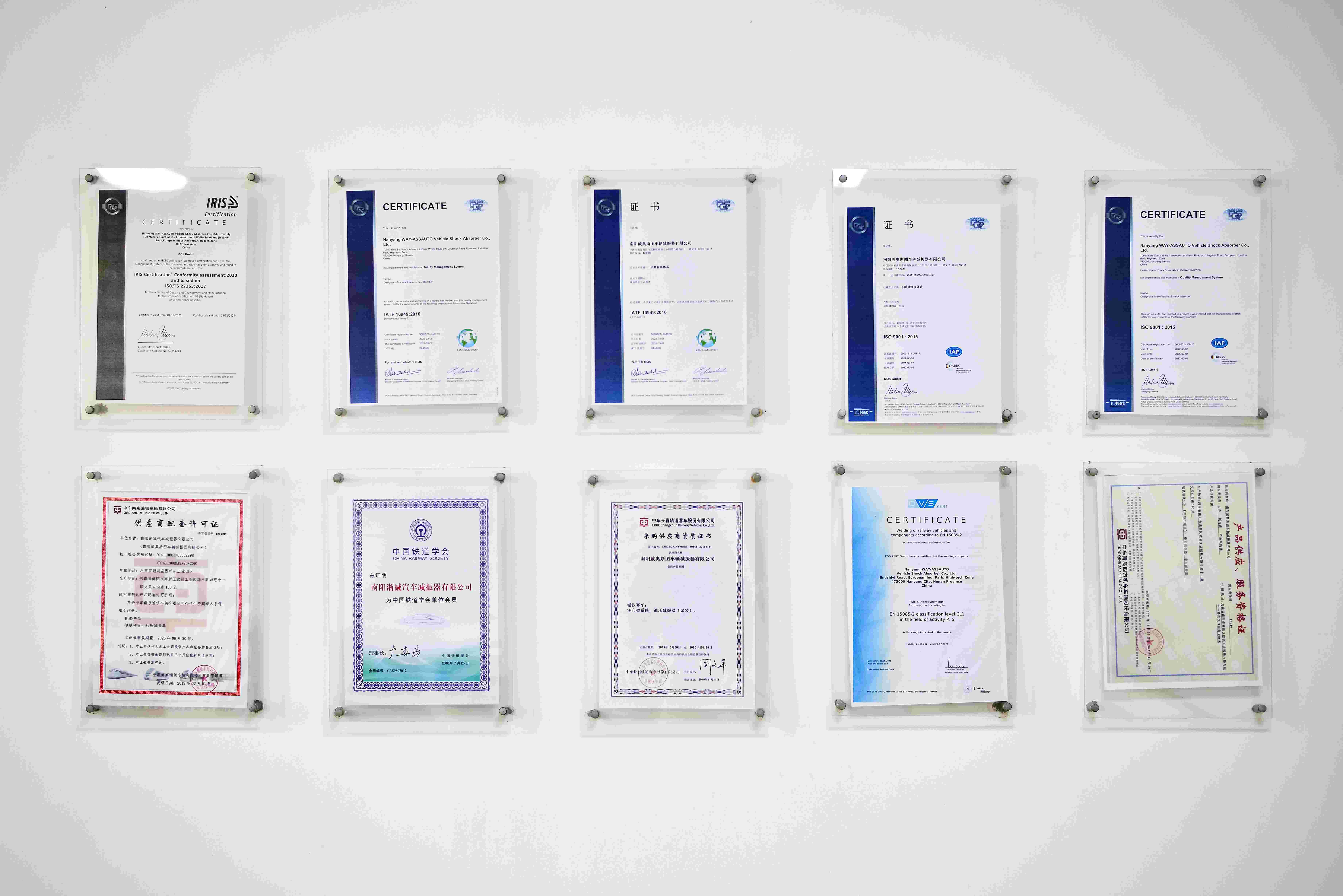
In the rail industry, obtaining a trial installation certificate typically takes three years or more. The company's Rail Transit Sales Department joined forces with the Technical Department to connect the entire chain of market engagement, solution design, and test verification, efficiently advancing documentation preparation, type testing, and factory audits. In September 2020, the CRCC trial installation certificate was obtained in less than a year — one of the fastest certification processes in the industry.
The certificate was not the finish line, but the starting point of in-service verification. In October 2021, the SW220K passenger car shock absorber technical scheme and the in-service assessment plan passed expert review and customer approval. During the same period, the interchangeability review report passed CRRC Tangshan's review, gaining OEM recognition and laying a solid foundation for on-track installation.
In-Service Assessment: Completing the 600,000 km Verification
In December 2021, the WAY-ASSAUTO 160 km/h power-concentrated EMU shock absorber was officially installed at the Qingdao EMU Depot, beginning a rigorous on-vehicle service assessment. The assessment coincided with the COVID-19 pandemic, creating numerous obstacles to personnel travel and on-site operations. Undeterred, the project team overcame multiple difficulties, including travel restrictions and complex on-site coordination, ensuring uninterrupted tracking, inspection, and data recording, and ensuring the project never fell behind schedule.
After extended in-service operation, on May 21, 2024, the shock absorber reached the 600,000 km assessment milestone. Together with CRCC, China Railway Jinan Group, and CRRC Tangshan, the company completed the disassembly inspection. Results showed the shock absorber in intact condition, free of any defects affecting operational safety or service order, with all indicators meeting the assessment requirements. The 160 EMU shock absorber passed the in-service assessment.
From launch to assessment completion, the project spanned five full years — the longest, most demanding, and most challenging new product project in the company's history.
Market Entry: From Verification to Mass Production
Passing the assessment fully demonstrates WAY-ASSAUTO's independent R&D and production capability for high-speed train hydraulic shock absorbers, completing the full chain from R&D and certification to in-service verification and mass supply — and opening the door to China Standard EMU projects at 200, 250, and 350 km/h.
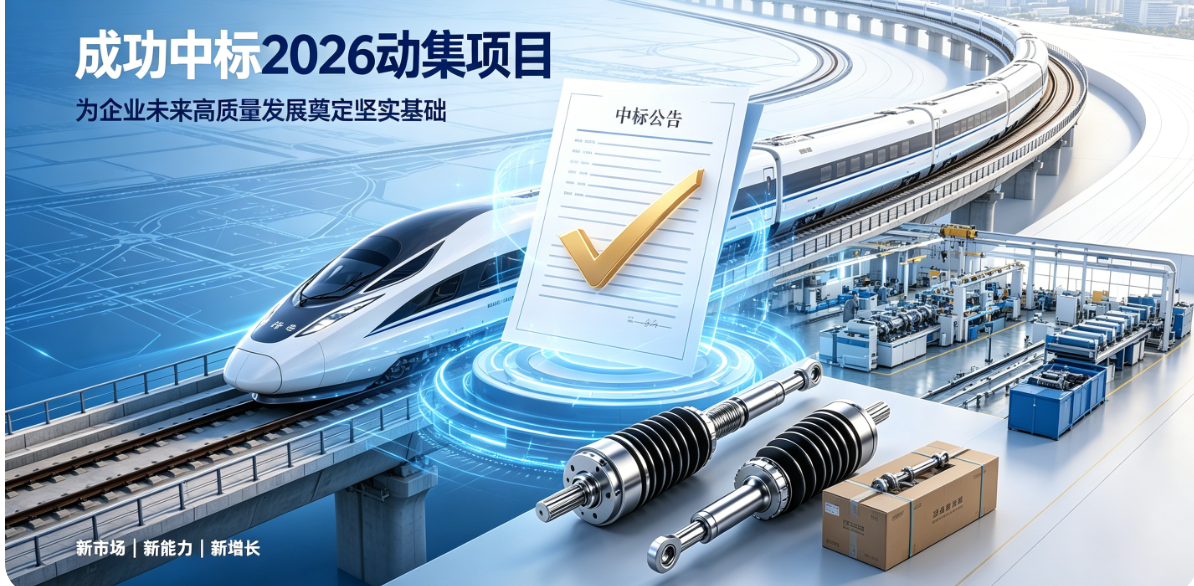
Building on the technical strength and track record accumulated through the project, in June 2026 the company won CRRC Nanjing Puzhen's key 160 EMU project in intense competition among four bidders, securing a substantial share of mass-production supply. This marks a historic breakthrough — the first large-scale supply of a Chinese homegrown brand for the 160 EMU, ending the long-standing monopoly of foreign brands. In the same period, the company also won a shock absorber maintenance contract, achieving strategic success in both new-build and aftermarket markets.
Cooperation Value
From scheme development, CRCC certification, and expert review, to persistent on-site tracking during the pandemic and the 600,000 km in-service assessment, and finally to winning the market bid — the project is a true testament to domestic rail transit shock absorbers overcoming challenges and achieving import substitution. Facing rigorous railway industry standards, the company fulfilled its delivery commitments to the OEM with meticulous engineering, full-process quality control, and efficient cross-functional teamwork.
The project's success is not only compelling proof of technical capability, but also builds a bridge for deep cooperation with CRRC system OEMs, accumulating valuable engineering experience across the complete development, assessment, and supply of high-speed EMU shock absorbers.
Conclusion
To build a strong transportation nation, rail must lead the way. The localization of core rail transit components demands long-term commitment and persistent effort. Going forward, Nanyang WAY-ASSAUTO will continue to build on its core damping technologies, stay customer-oriented, deepen its presence in the rail equipment market, keep refining product quality, and work hand in hand with major OEMs — contributing the strength of a Chinese enterprise to a secure, self-reliant, and high-quality rail transit industry in China.
 Prev
 Return
More News
2026.10.01
Technical Breakthrough | WAY-ASSAUTO CDC Shock Absorber Enters the High-End Bus Market in Partnership with Yutong
2026.10.01
CIJAN Joins Hands with Nanjing Metro to Forge a New Future for Green Travel.
2024.12.11
CIJAN with Stellantis- Opening a New Chapter in Global Collaboration
2024.11.19
CIJAN and Volkswagen - Witnessing the Miracle of Growth
2024.11.27
CIJAN and Chery - 25 Years of Growing Together.
2024.11.19
CIJAN and Geely - Customer-Centricity is Our Principle